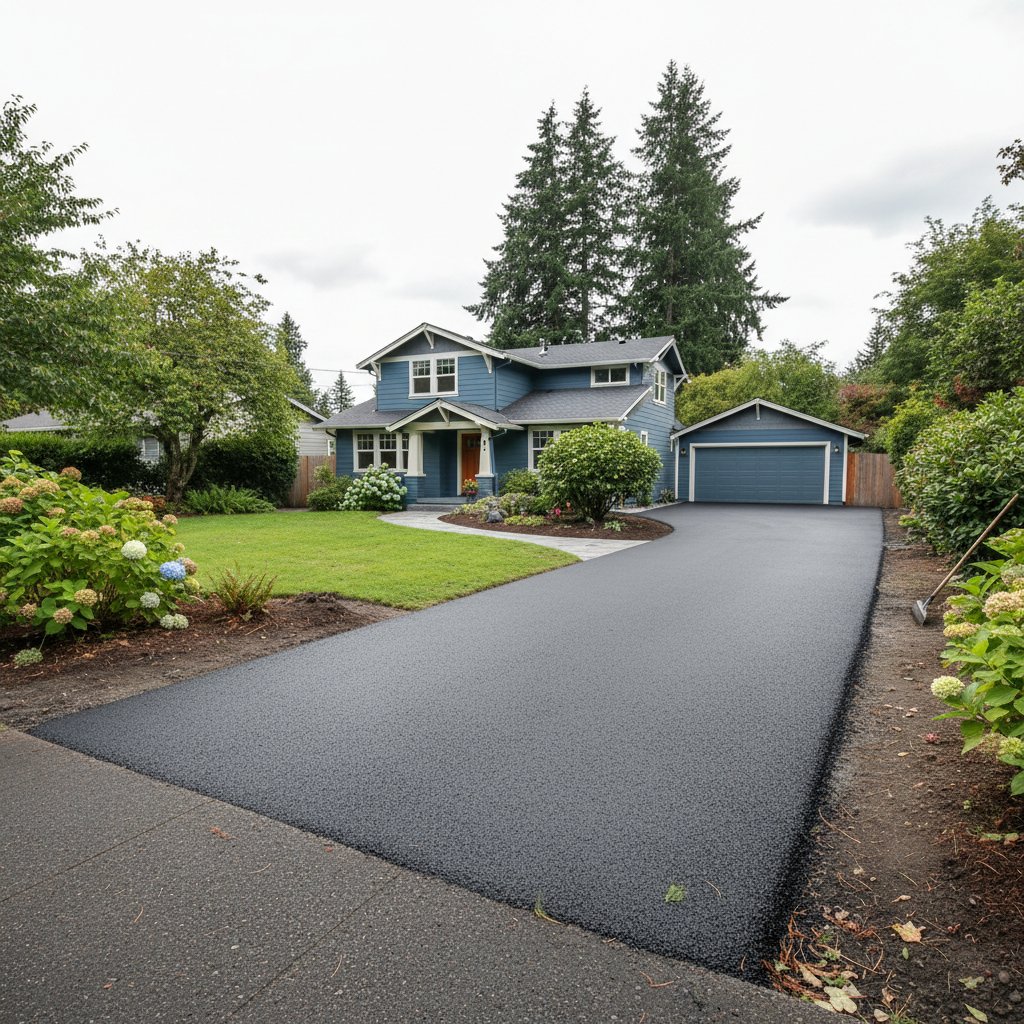
What's the Deal with Asphalt Driveway Costs?
You're looking at a new asphalt driveway, and you want to know what it's gonna cost. That's fair. It's one of the biggest questions I get, and frankly, it's not a simple 'X dollars per square foot' answer. There are a lot of moving parts, but I can give you a solid idea of what to expect here in Portland.
First off, don't just go with the cheapest bid. I've seen too many folks regret that decision when their 'deal' starts cracking and sinking after a year. Good asphalt work is an investment, and you want it done right the first time. We're talking about something that's gonna last you 15-20 years if it's installed properly.
What Affects the Price Tag?
Alright, let's get into the nitty-gritty. Here's what really makes the price go up or down:
- Size and Shape: This is obvious, right? A bigger driveway means more material and more labor. But shape matters too. A perfectly rectangular driveway is easier and quicker to pave than one with a bunch of curves, cutouts, or tight turns. Each extra corner or curve adds time and precision work.
- Existing Conditions & Prep Work: This is huge. Is your old driveway just dirt, gravel, or existing asphalt that needs to be removed? If we're tearing out old concrete or asphalt, that's extra labor, equipment, and disposal fees. If the sub-base (the dirt underneath everything) isn't stable, we'll need to dig it out, bring in new aggregate, and compact it properly. This is especially true in some of Portland's older neighborhoods like Laurelhurst or Sellwood, where you might have soft, clay-heavy soil that needs serious attention to prevent future sinking.
- Asphalt Thickness: Most residential driveways get two layers: a binder course (the rougher stuff) and a surface course (the smooth top layer). Standard thickness is usually 2-3 inches for the binder and 1.5-2 inches for the surface. Thicker asphalt costs more because it uses more material, but it's also more durable and less likely to crack under heavy loads.
- Drainage Needs: Good drainage is critical, especially with all the rain we get here in the Pacific Northwest. If your property has poor drainage, we might need to install French drains, catch basins, or adjust the grading significantly. This prevents water from pooling on your driveway and undermining the base, which is a common cause of premature failure.
- Accessibility: Can our equipment easily get to your driveway? If we have to haul materials a long distance or work in a super tight space, that adds to the labor cost.
- Permits: Sometimes, depending on the scope of work and local regulations, you might need a permit. We'll handle that for you, but it's an additional cost.
Typical Cost Ranges for Residential Asphalt in Portland
Okay, let's talk numbers. I know you want specifics, so here's what I've seen in the Portland metro area. Keep in mind these are averages, and your specific project could be higher or lower.
For a standard residential asphalt driveway, including proper excavation, a good aggregate base, and 3-4 inches of compacted asphalt, you're generally looking at:
- Small Driveways (up to 500 sq ft): Think a single-car width, short driveway. You might see prices in the range of $4,000 - $7,000.
- Medium Driveways (500 - 1,000 sq ft): This is your typical two-car driveway. Expect to pay between $7,000 - $12,000.
- Large Driveways (1,000 - 2,000+ sq ft): For bigger driveways, long private lanes, or those with complex layouts, costs can range from $12,000 to $25,000 or more.
On average, you're looking at about $6 to $12 per square foot for a complete, new asphalt installation. If it's just an overlay (paving over existing, stable asphalt), it'll be less, maybe $3-$6 per square foot, but that's only an option if the existing base is in good shape.
What Should a Quote Include?
When you get a quote, make sure it's detailed. A good quote from a company like Peak Asphalt Solutions will clearly outline:
- Scope of Work: What exactly are they doing? Removal of old material? How deep will they excavate? What kind of base material?
- Material Specifications: How many inches of aggregate base? How many inches of asphalt, and in how many lifts (layers)?
- Drainage: Any specific drainage solutions mentioned?
- Timeline: When will they start and finish?
- Warranty: What kind of guarantee do they offer on their work?
- Total Cost: A clear, itemized breakdown of costs, not just a lump sum.
How to Avoid Overpaying
This is where you can save yourself some headaches and money.
- Get Multiple Bids: Don't just call one guy. Get at least three detailed quotes. This helps you compare not just price, but also the proposed scope of work and materials.
- Check References & Reviews: Look for contractors with a solid reputation. Ask for local references. Check their online reviews. You want someone who stands behind their work.
- Ask Questions: If something in the quote isn't clear, ask. A good contractor will take the time to explain everything to you.
- Don't Rush: Don't feel pressured to sign on the spot. Take your time to review the quotes and make an informed decision.
- Understand the Prep Work: The base is everything. If a contractor tries to cut corners on the excavation and base preparation, that's a red flag. A cheap job now means expensive repairs later.
A new asphalt driveway is a big investment, and you want it done right. By understanding what goes into the cost and asking the right questions, you'll be able to get a durable, good-looking driveway that adds value to your home for years to come.