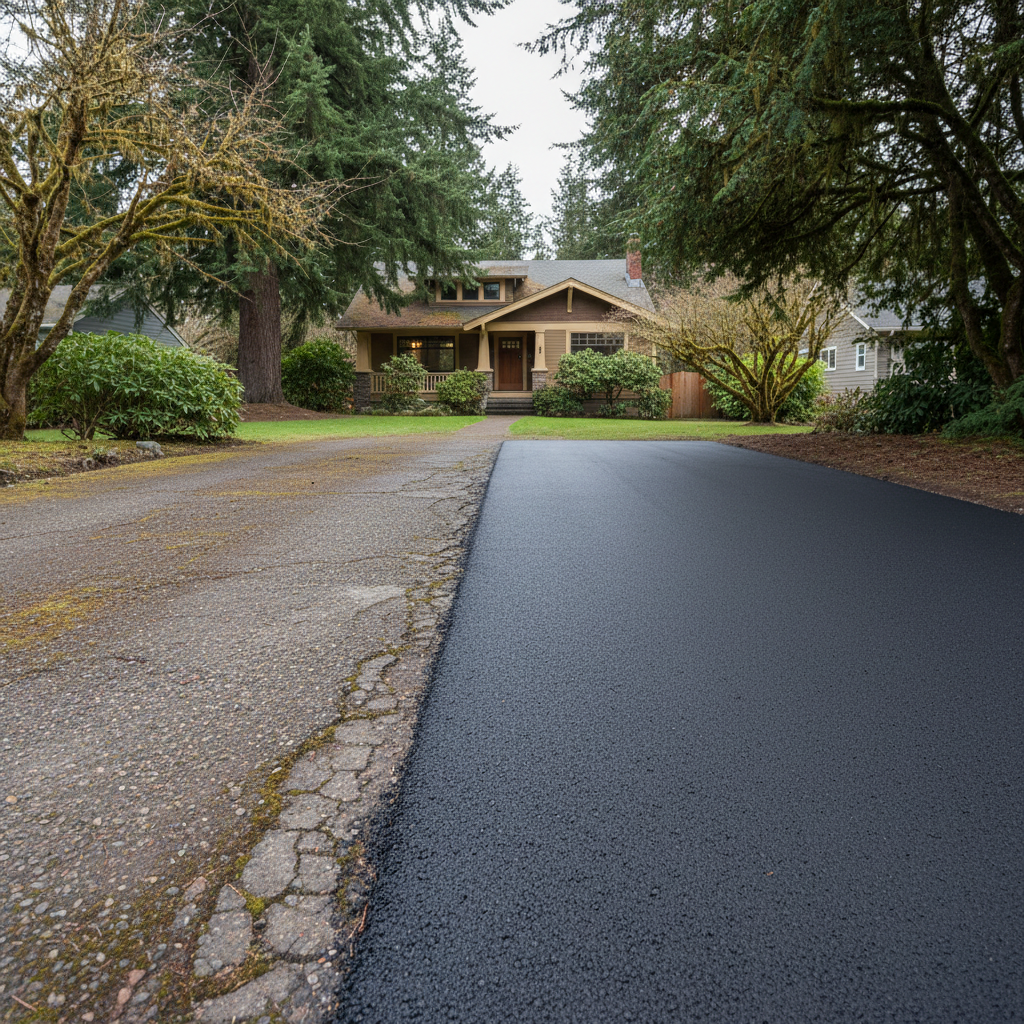
Alright, let's talk about that driveway of yours. You've got some cracks, maybe a pothole or two, and you're probably scratching your head, wondering what the heck to do about it. You've probably heard of patching, and maybe someone mentioned an overlay. So, what's the real difference between them? And which one will actually hold up here in Portland?
Asphalt Patching: The Quick Fix
Patching is pretty much what it sounds like: we're fixing a specific problem area. Think of it like putting a band-aid on a cut, but for your driveway. We'll cut out the damaged section of asphalt, clean it up really well, and then fill it with new hot asphalt. For smaller issues, sometimes we just clean and fill. Infrared patching, for example, heats the existing asphalt so the new stuff blends in nicely.
Pros of Patching:
- Cheaper Upfront: It's generally less expensive to start because you're only paying for materials and labor on a small section.
- Fast: We can usually get in and out pretty quickly. Your driveway won't be out of commission for long at all.
- Targets Specific Damage: If you've only got one or two isolated potholes or cracks, a patch makes perfect sense.
Cons of Patching:
- Appearance: Let's be honest, a patch is a patch. It's going to stick out. You'll have a new section of asphalt right next to older, faded stuff, and it just won't look uniform.
- Durability: This is the big one, isn't it? A patch is only as good as the asphalt around it. If the rest of your driveway is old and falling apart, new cracks will likely pop up around that patch pretty quickly. It's not a long-term solution for a driveway that's already failing.
- Limited Scope: It doesn't actually fix underlying problems like poor drainage or a failing base across the whole surface.
Asphalt Overlay: A Fresh New Surface
An overlay, sometimes called a resurface, is a whole different ballgame. Instead of just fixing spots, we put a brand new layer of asphalt right over your existing, structurally sound driveway. It's like giving your driveway a whole new skin, if you will. First, we prep the existing surface – cleaning it thoroughly, filling any major cracks or potholes (we call these 'leveling courses' or 'binder courses'). Then, we apply a tack coat to help the new asphalt bond. After that, we lay down a fresh layer, usually about 1.5 to 2 inches thick, across the entire surface.
Pros of an Overlay:
- Appearance: This is where an overlay really shines. You get a beautiful, smooth, uniform new surface that looks fantastic. It instantly boosts your curb appeal, no question.
- Durability: If your existing base is still in good shape, an overlay can add years, even decades, to your driveway's life. It seals up those small cracks and gives you a fresh, resilient wearing course.
- Cost-Effective (Long-Term): Sure, it's more expensive upfront than just a patch, but an overlay is much, much cheaper than a full tear-out and replacement. It's a smart way to get a 'new' driveway without the full, hefty cost.
- Improved Drainage: We can often make small adjustments to the grade during an overlay to improve water runoff. That's huge for preventing future damage, especially with all the rain we get here in Portland.
Cons of an Overlay:
- Cost: It's definitely more expensive than just patching, let's not kid ourselves.
- Not for Severely Damaged Driveways: If your driveway has major structural issues – widespread alligator cracking, significant heaving, or a failing base – an overlay won't fix it. In that case, you'd need a full tear-out and replacement.
- Height Increase: You're adding 1.5 to 2 inches of asphalt. This can sometimes create minor issues with garage door clearances or transitions to sidewalks, so we always check for that beforehand.
Which One Should You Choose for Your Portland Home?
Here's my honest take, especially when you think about our wet Portland climate and the clay soils we often deal with in neighborhoods like Beaverton or Hillsboro. If you've got:
- A few isolated potholes or cracks: Go with patching. It's a smart, economical fix for localized damage. Just understand that it's not a permanent solution for a driveway that's already getting old.
- Widespread minor to moderate cracking, fading, or surface deterioration, but a generally sound base: An asphalt overlay is usually your best bet. It's going to give you the most bang for your buck in terms of how it looks and how long it lasts. Plus, it'll protect your investment for years and look great doing it.
- Major structural failure, widespread deep cracks, significant heaving, or drainage issues that a simple grade adjustment won't fix: You're probably looking at a full tear-out and replacement. An overlay simply won't be enough there.
Ultimately, it really comes down to the condition of your existing driveway and what you're hoping to achieve. Do you just want a quick fix, or are you looking for a long-lasting solution that makes your property look sharp? For most Portland homeowners with a driveway that's seen better days but isn't completely shot, an overlay hits that sweet spot. It's a great investment that provides a beautiful, durable surface without the expense of starting from scratch.
If you're still not sure, give us a call at Peak Asphalt Solutions. We'll come out, take a look at your driveway, and give you an honest assessment of what we think is the best approach. No pressure, just good advice from folks who actually know asphalt.